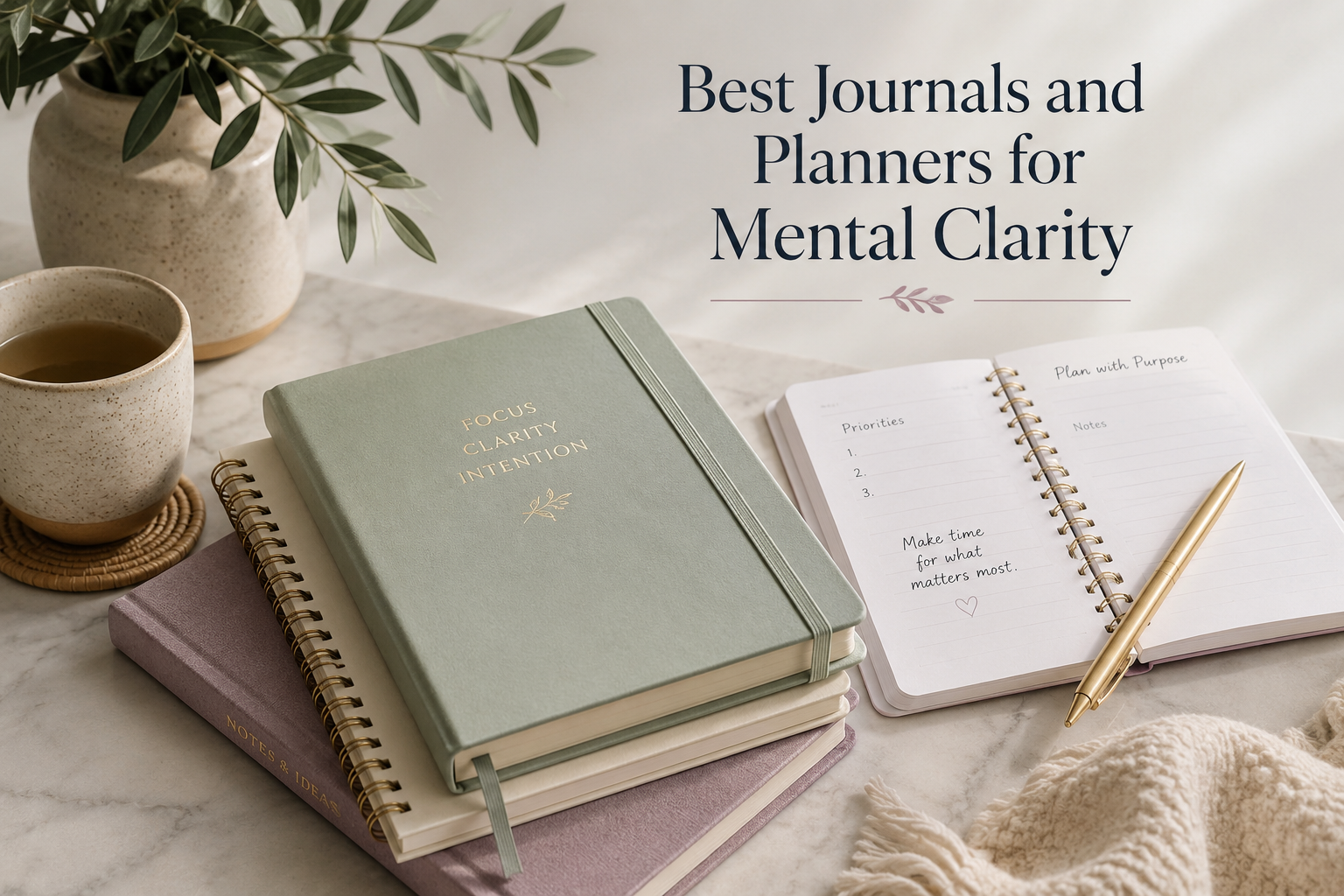
5 Best Wellness Planners & Journals for Mental Clarity (2026)
There’s something about a good planner that just… calms the noise down. Maybe it’s the smell of a fresh notebook, or the satisfaction of crossing something off a list, or just having one place where your brain can stop trying to remember everything at once. If you’re the type who loves a pretty cover as much as a functional layout (looking at you, Emily Ley and Rifle Paper Co. fans), this list is for you.
Below, I’m sharing my top picks along with a breakdown of daily, weekly, and monthly formats so you can figure out which rhythm actually fits your life.
This post contains affiliate links, which means I may earn a small commission if you shop through them — at no extra cost to you.
The Short List: Three to Start With
If you only remember three names from this post, make it these:
- Rifle Paper Co. — still the original for illustrated florals and 12-month planners.
- Emily Ley’s Simplified Planner — the daily/weekly hybrid that started the whole “pretty but functional” movement.
- Erin Condren LifePlanner — the most customizable of the bunch, with color, sticker, and layout options for days.
Everything else below builds on these three, whether you want something more minimal, more daily-focused, or more budget-friendly.
Why the Right Planner Actually Helps Your Mental Clarity
Before we get into the picks, it’s worth saying: this isn’t just about aesthetics (though we love a good floral cover). Writing things down gets them out of your head and onto paper, which is one of the simplest ways to quiet that background hum of “wait, did I forget something?” A planner that you actually enjoy opening is one you’ll actually use — and consistency is where the real clarity comes from.
Daily vs. Weekly vs. Monthly: Which One Is Actually Right for You?
This is honestly the bigger decision than which brand to buy — the format has to match how your brain and your days actually work, or the planner ends up sitting on a shelf.
Choose daily if: your schedule is packed with back-to-back meetings, appointments, or a long list of small tasks that shift by the hour. Daily layouts give you room to plan hour-by-hour, which is a relief if you’re the type who needs to see today broken into pieces rather than lumped together. They’re also great if you like built-in prompts — gratitude notes, top-three priorities, morning/evening reflection — since daily formats tend to have the most room for that kind of check-in.
Choose weekly if: you want to see the whole week at a glance without committing to filling in every single day. This is the sweet spot for most people — enough structure to plan ahead, but enough flexibility that a lighter day doesn’t feel like wasted space. Weekly is also the easiest format to stick with long-term, since it takes less daily upkeep than a full daily spread.
Choose monthly if: you’re more of a big-picture thinker, or your clarity comes from seeing deadlines, birthdays, and events laid out across weeks rather than tracking granular to-dos. Monthly spreads are also a great companion to a separate notebook or journal, since they free up the planner itself to just hold the calendar view while your daily thoughts go elsewhere.
If you’re not sure, weekly is the safest starting point — it’s flexible enough to lean daily or monthly depending on how busy a given stretch is.
Finding Your Fit
The “best” planner is really just the one you’ll actually pick up every day. If you’re a visual person, start with the covers that make you smile. If you’re more function-first, start with the layout — daily, weekly, or monthly — and let the pretty stuff be the bonus. Either way, a little dedicated space for your thoughts goes a long way toward a clearer head.
Let us know your favorite type of planner below! Always curious as to what works for others to keep organized.
